
What We’ve Become
“What We’ve Become” is the first direct confrontation between Adam and Eve and the reality of their fracture. This is not accusation. It is confession.
The tone remains controlled. No shouting. No theatrical blame. The devastation lies in clarity. The world is unchanged. They are not.
Verse one begins with Adam responding to the call. The name that shattered him in “I Heard My Name” now becomes communal weight. “I felt too visible to stand my ground.” Visibility is no longer gift. It is exposure.
Eve’s verse reframes their intention. “Not to wound – but to hold the stars.” This line must land gently. They did not act out of hatred. They acted out of desire. That makes the fracture tragic rather than villainous.
The pre-chorus names the internal rupture. “We are not broken in the sky. We are fractured inside.” The sky remains whole. The damage is relational and interior. This distinction anchors the entire number.
The first chorus introduces the central refrain: “Look at what we’ve become.” The melody should feel heavy but not explosive. The harmony should carry slight minor tonal color, hinting at grief without collapsing into melodrama. “But we don’t fit where we belong” is the emotional core. Exile begins internally before it becomes physical.
The Men’s Ensemble underlines with “Line.” The Women’s Ensemble sustains “Seam.” These single words connect directly back to earlier structural language. Boundary and fracture now coexist.
Verse two removes defensiveness. “We did not hate what You had made.” Adam and Eve articulate that their choice was not rebellion against goodness. It was miscalculation. “We only tested what we could name.” This echoes earlier curiosity in “Gravity in My Bones.” Knowledge once explored safely now carries cost.
The second pre-chorus sharpens the paradox. “Knowing more has shown us less.” Clarity becomes distress. Perception does not bring peace.
The second chorus expands harmonically. The ensemble joins in fractured harmony beneath the duet. The line “Something ancient has begun” signals that consequence is unfolding beyond them. The fracture is not momentary. It is generational.
The final phrase, “Outside what once we knew,” must land softly. The music thins, preparing for God’s lament. No resolution chord. The grief is suspended.
“What We’ve Become” bridges personal shame and divine sorrow. It must feel honest and restrained. If it becomes dramatic confrontation, it loses weight. If it remains confessional, it devastates.
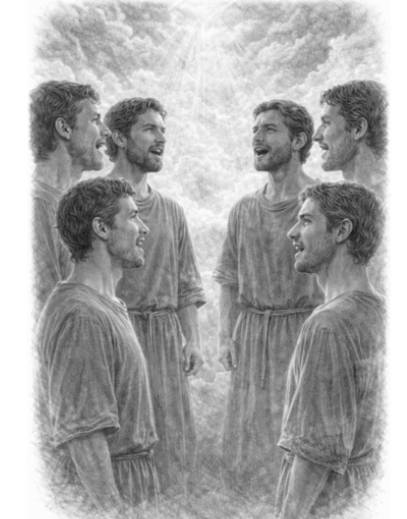
Men’s Ensemble
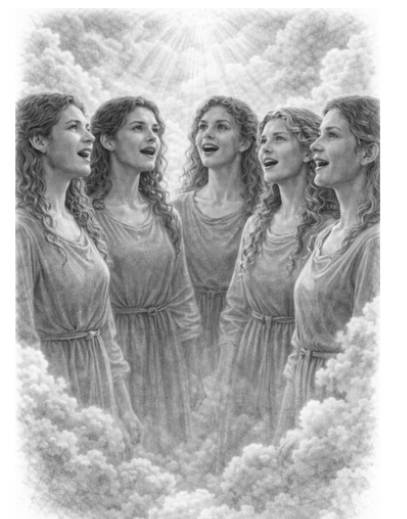
Women’s Ensemble
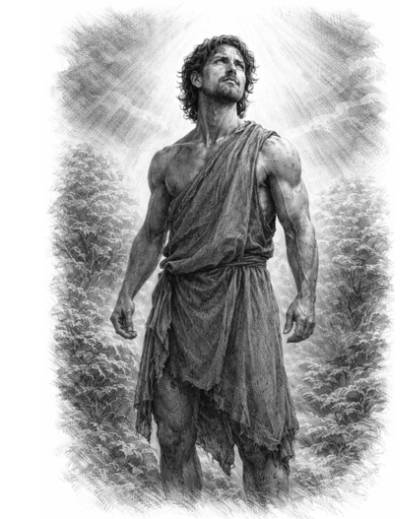
Adam
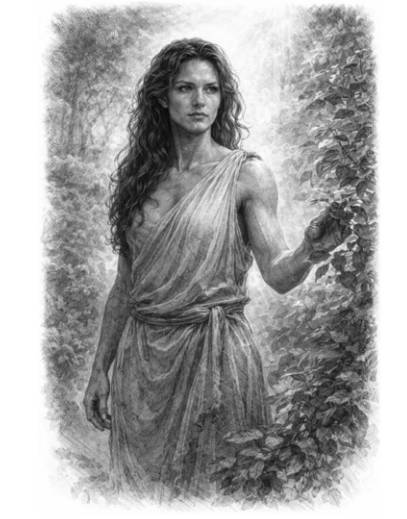
Eve
“What We’ve Become” Primary Singers
ADAM – Low Baritone (Lead)
Adam carries regret without defensiveness. His tone must remain grounded but tender.
- Tone: Confessional, weighted, restrained
- Vocal Color: Breath-forward baritone with softened grit
- Function in Song: Acknowledges internal fracture and visible exposure
- Influences: Intimate soul confessionals with controlled phrasing
EVE – Mezzo-Soprano / Alto (Lead)
Eve articulates intention and shared responsibility. Her voice must feel steady, not fragile.
- Tone: Honest, composed, quietly sorrowful
- Vocal Color: Clear resonance with minor tonal warmth
- Function in Song: Expresses motive without excuse, names the shared fracture
ENSEMBLE – Fractured Harmony (Support)
MEN’S ENSEMBLE
- Tone: Low, minimal, structural
- Vocal Color: Subtle rhythmic articulation and grounded hum
- Function: Reinforces boundary and structural language
WOMEN’S ENSEMBLE
- Tone: Sustained, minor-toned, watchful
- Vocal Color: Soft layered harmonies with slight dissonance
- Function: Amplifies emotional weight and tonal instability
The number must leave the audience in a state of breathless anticipation, fully immersed in a world where sound is survival and liberation begins as a whisper.
“What We’ve Become” Musical Style & Direction
A slow-building minor-toned duet with fractured ensemble harmonies. The style blends restrained theatrical confession with subtle harmonic instability.
Musical Arc
- Confessional Opening
- Slow pulse
- Minor tonal color introduced
- Sparse piano and low pad
- Adam begins
- Shared Acknowledgment
- Eve enters
- Close harmony forms
- No dynamic spike
- Weighted Chorus
- Melody broadens slightly
- Ensemble low texture enters
- Minor harmonic tension
- Structural Reminder
- Single-word ensemble accents
- Rhythm remains steady but subdued
- Deepening Realization
- Second verse layered slightly fuller
- Harmonic instability more present
- No crescendo
- Expanded Chorus
- Fuller ensemble fractured harmony
- Emotional peak through layering, not volume
- Ends unresolved
Instrumentation
- Soft piano
- Warm minor-toned pad
- Subtle sub-bass pulse
- Light rhythmic instability
- Layered ensemble harmony with mild dissonance
Musical Influences & References
- Cinematic confession duets
- Minor-key ensemble ballads
- Minimalist dramatic scoring
- Contemporary theatrical slow-build numbers
Musical Direction Notes
- Avoid confrontation energy. This is confession.
- No vocal aggression.
- Let harmonies feel slightly unstable but musical.
- Do not over-orchestrate. Space is grief.
- The second chorus should feel heavier, not louder.
- End without resolution.
[VERSE 1 - ADAM]
I heard You call
and I knew the sound,
But I felt too visible
to stand my ground.
The light still burns
but it feels too clear,
Like it sees the part
I didn’t fear.
[EVE]
We reached for more
than what was ours,
Not to wound –
but to hold the stars.
[ADAM]
We thought the edge
was meant to bend,
Not to mark
where we must end.
[PRE-CHORUS - ADAM & EVE]
We are not broken
in the sky.
We are fractured
inside.
[CHORUS - ADAM & EVE]
Look at what we’ve become,
Still standing under the sun.
The garden breathes, the rivers run,
But something in us has come undone.
Look at what we’ve become,
Not divided – but not one.
The world remains, the light still strong,
But we don’t fit
where we belong.
[MEN’S ENSEMBLE - low pulse]
Line.
[WOMEN’S ENSEMBLE - sustained]
Seam.
[VERSE 2 - ADAM & EVE]
We did not hate
what You had made.
We only stepped
where shade was laid.
We did not rage
against Your frame.
We only tested
what we could name.
[PRE-CHORUS - ADAM & EVE]
But knowing more
has shown us less.
Clarity
became distress.
[CHORUS - fuller harmony]
Look at what we’ve become,
Still breathing, still undone.
The sky unchanged, the day still young,
But something ancient has begun.
Look at what we’ve become,
Two hearts, but not as one.
The world remains, but we have moved
Outside
what once we knew.