
Angel At the Gate
The Angel at the Gate is not fury. The Angel is finality.
This role does not exist to threaten. It exists to mark transition. The garden does not collapse in flame and spectacle. It recedes. The Angel stands as boundary embodied.
There is no rage in this presence. No aggression. No theatrical display of power. The authority is quiet and immovable. The gate of flame is less about fire and more about direction. Forward only.
Vocally, the Angel may speak or sing, or may be carried through ensemble texture. The tone must feel inevitable rather than dramatic. When the Angel speaks, it should sound like gravity – not anger. When the Angel sings, it should feel like distance settling into permanence.
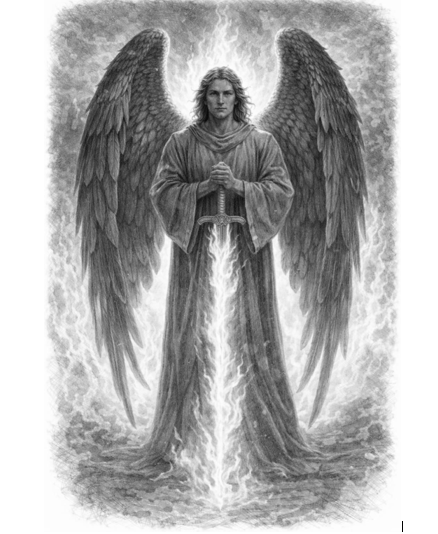
Physically, the Angel’s movement is minimal and deliberate. Stillness communicates more than gesture. Placement matters. A single step forward can close space. A turn can signal irreversible shift. The audience should feel the boundary before it is named.
The Angel does not chase Adam and Eve out. The Angel stands. The exile is experienced as separation rather than expulsion. The flame is not wrath. It is consequence solidified.
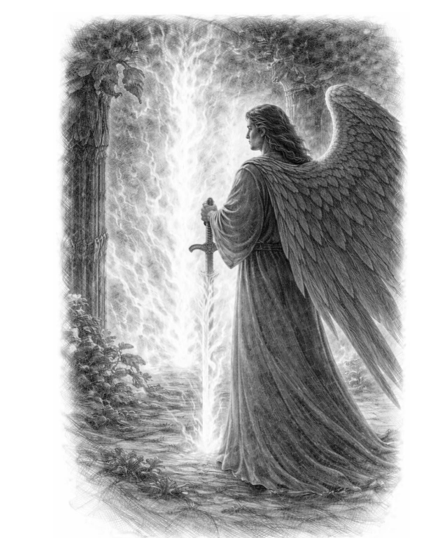
This role may be embodied by a single performer or distributed among ensemble voices. In either case, the effect should be structural. The garden behind. The path ahead. No return.
Emotionally, the Angel represents the ache of finality. The world remains good. The humans are not annihilated. But innocence cannot be restored through denial.
The Angel does not speak judgment. The Angel enforces direction.
In the broader architecture of Eden, this presence reinforces the truth that some lines, once crossed, cannot be uncrossed. That truth is not cruel. It is real.
The Angel at the Gate stands not as enemy, but as witness to a turning. Not to condemn, but to mark the moment where memory replaces dwelling and forward motion becomes the only path.