Adam
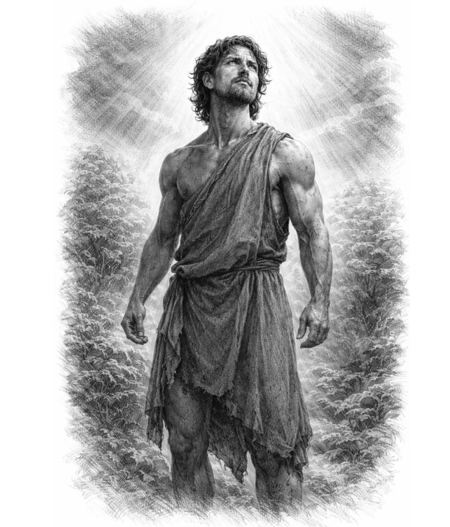
Adam in Eden is not a symbol before he is a man. He is body first. Breath first. Weight first.
He enters the world not with philosophy, but with sensation. Gravity teaches him before language does. The ground answers him before he understands why. His earliest songs are not declarations. They are discoveries.
Adam represents embodiment. He learns through resistance. When he steps, the earth responds. When he falls, it does not soften. His spiritual awareness is born from physical encounter. Consequence is not theoretical for him. It is felt in muscle and bone.
Vocally, Adam’s sound must live low in the body. Breath-forward. Textured. Grounded. He does not belt innocence. He does not perform wonder. He experiences it. Even in quiet moments, the voice should carry weight.
In Act I, Adam’s arc moves from awakening to recognition. In “Awake in the World,” he is stunned by existence itself. In “Gravity and Sound,” he collides with law and learns that freedom is not floating. It is structured. His learning is honest. Earnest. Physical.
When Eve enters, Adam does not dominate. He recognizes. “Bone of my bone” is not romance spectacle. It is equilibrium. He sees himself and discovers he is not alone.
The fracture shifts him inward.
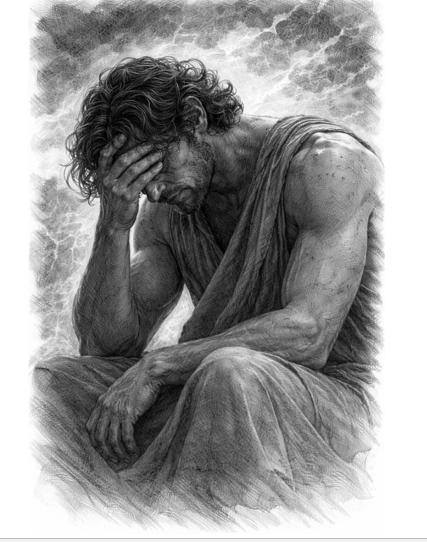
In “I Heard My Name,” Adam cracks. Shame enters not as loud confession, but as withdrawal. He hides not because he is wicked, but because he feels exposed. This is the emotional hinge of the show. The same man who once stood unhidden now lowers his gaze.
Adam’s strength in this moment must be restraint. The devastation is quiet. The crack is interior.
Exile reshapes him again.
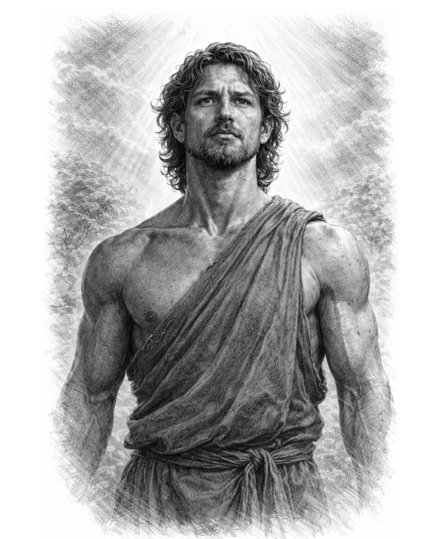
He becomes laborer. He becomes bearer of weight. But he does not collapse into bitterness. The ground still answers him. It simply asks more. In “Still We Rise,” his voice regains stability. The earlier crack is gone, replaced by earned grit.
Adam’s maturity is not return to innocence. It is endurance through responsibility.
He does not escape consequence. He carries it. He does not erase fracture. He learns to stand within it.
Physically, Adam’s movement evolves across the show. Early choreography is exploratory and open. After the fall, posture shifts. Shoulders narrow. Steps hesitate. In exile, movement becomes grounded and repetitive. By the cu2rtain call, his stance is firm. Not triumphant. Rooted.
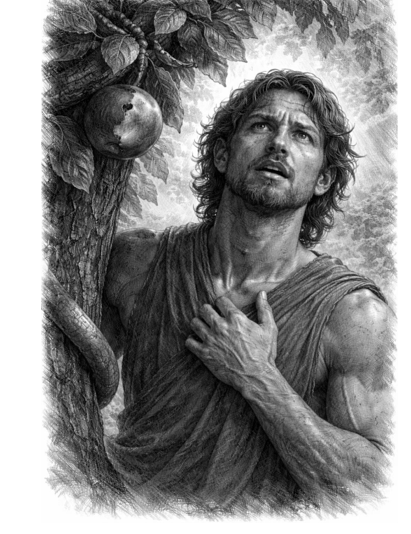
Adam is the human arc of the story.
He embodies curiosity.
He feels shame.
He learns labor.
He chooses dignity.
He is not the villain of Eden. He is its witness. Its learner. Its bearer of weight.
Through him, the audience experiences the cost of choice and the possibility of resilience.
Adam begins as dust and breath.
He ends as breath that endures.