
Where Are You
“Where Are You” is not judgment. It is grief.
This is the first time God sings alone in sustained melodic line rather than architectural cadence. The authority remains, but it softens into sorrow. The world is still intact. The fracture is relational.
The staging should be simple. Adam and Eve remain present but hidden. God does not storm the garden. He stands within it.
Verse one recalls origin. “I placed you in light that did not accuse.” The tone must be steady, not accusatory. The line “You stood without fear, unhidden, unbowed” anchors what has been lost. This is not about broken rules. It is about altered posture.
The pre-chorus tightens emotionally. “Now I call and you retreat.” God’s lament is not thunder. It is noticing distance. The folding of breath signals shame more than rebellion.
The chorus must carry weight without force. “Where are you when I call your name?” This is not geographical. It is relational. The garden stands. The problem is proximity. “You were not made for hiding from grace” should land gently. Grace is not revoked. It is avoided.
The Women’s Ensemble echoes “Grace” softly, lifting the word rather than amplifying it. It should feel like air carrying mercy.
Verse two dismantles misconception. “The line was not prison. The fruit was not war.” God clarifies intent without anger. Protection was mistaken for restriction. The lyric must feel sorrowful, not defensive.
The second pre-chorus names the seam. “Not in the sky – inside your view.” The fracture has always been internal. God’s perspective has not shifted. The humans’ has.
The second chorus widens slightly in harmony but remains restrained. The line “You were not made to hide from being brave” reframes repentance as courage. This is invitation, not condemnation.
The outro is simple. “Come out.” No crescendo. No orchestral swell.
Just an open call.
Silence follows.
“Where Are You” is the theological center of Eden. If God sounds wrathful, the show collapses into fear. If He sounds indifferent, the show loses gravity. This must be sorrow contained by love.
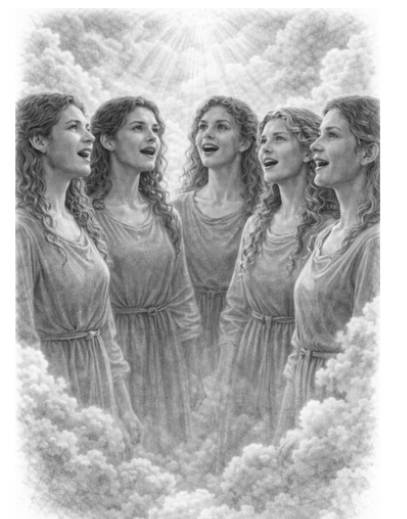
Women’s Ensemble

God
“Where Are You” Primary Singers
GOD – Bass-Baritone or Basso Profondo (Lead)
God’s voice shifts from measured architecture to sustained lament. Authority remains, but cadence softens.
- Tone: Deep, steady, sorrowful restraint
- Vocal Color: Resonant bass-baritone with sustained warmth and controlled vibrato
- Function in Song: Expresses relational distance, clarifies protection, invites return
- Influences: Minimalist sacred chant, restrained cinematic bass solos, reverent oratorio phrasing
WOMEN’S ENSEMBLE – Harmony Lift (Support)
They provide subtle harmonic support and echo key words.
- Tone: Soft, luminous, compassionate
- Vocal Color: Sustained upper harmonies with blended warmth
- Function in Song: Amplifies grace and emotional atmosphere without overpowering
“Where Are You” Musical Style & Direction
A slow, minimal lament rooted in sustained lines and restrained orchestration. The style blends sacred minimalism with intimate theatrical scoring. Musical Arc
- Origin Recalled
- Low piano or sustained strings
- No percussion
- God begins alone
- Relational Tension
- Slight harmonic layering in pre-chorus
- Emotional weight increases through sustain, not rhythm
- Lament Chorus
- Melody broadens
- Women’s Ensemble soft echo
- Dynamics remain controlled
- Clarification
- Verse two continues minimal instrumentation
- Slight harmonic deepening
- No escalation
- Invitation
- Second chorus fuller but still restrained
- Final line softened
- Emotional peak through sincerity
- Open Ending
- Instruments thin
- “Come out” nearly spoken
- Silence sustained
Instrumentation
- Low piano or sustained strings
- Warm ambient pad
- Subtle sub-bass foundation
- Minimal harmonic lift from ensemble
- No percussion
Musical Influences & References
- Sacred lament traditions
- Cinematic minimalist scoring
- Intimate oratorio-style solos
- Reverent contemporary worship minimalism
Musical Direction Notes
- Do not perform anger.
- Keep tempo steady and unhurried.
- Allow space between lines.
- Sustained notes should carry warmth, not volume.
- The echo of “Grace” must feel gentle, not dramatic.
The final “Come out” should feel like invitation, not command.
[VERSE 1 - GOD]
I placed you in light
that did not accuse.
I gave you a world
you did not have to choose.
I shaped you from dust
and named you aloud.
You stood without fear,
unhidden, unbowed.
[PRE-CHORUS]
Now I call
and you retreat.
You fold your breath.
You lower your feet.
[CHORUS - GOD]
Where are you
when I call your name?
The garden stands –
it’s not the same.
Where are you
in the light I gave?
You were not made
for hiding from grace
[WOMEN’S ENSEMBLE - soft echo]
Grace…
[VERSE 2 - GOD]
The line was not prison.
The fruit was not war.
The edge was protection –
nothing more.
You were not less
for what you did not hold.
You were not weak
for leaving it untold.
[PRE-CHORUS]
But now the seam
is drawn by you.
Not in the sky –
inside your view.
[CHORUS - GOD, fuller but restrained]
Where are you
when I call your name?
The ground still answers,
the sky the same.
Where are you
in the breath I gave?
You were not made
to hide from being brave.
[OUTRO - GOD, soft]
Come out.